Melatonin in Japan: What to Buy at the Pharmacy Instead
Japanese drugstores don't sell melatonin. Here are the sleep aids you can buy instead — including Rozerem S, Japan's first OTC sleep aid with ramelteon, which acts on melatonin receptors.

You can't buy melatonin in Japan. Not at Matsumoto Kiyoshi, not at Welcia, not at the convenience store. If you take it back home to fall asleep, this catches a lot of people off guard.
There is good news for anyone hunting for a melatonin alternative, though. Since July 2026, Japanese pharmacies have sold Rozerem S (ロゼレムS), an OTC sleep aid that works on the same melatonin receptors in the brain. It isn't melatonin, and you have to buy it from a pharmacist. Here is what Japan actually has, and how the options differ.
Quick answer
- Melatonin: not sold at drugstores or as a supplement in Japan.
- Closest substitute: Rozerem S (ramelteon). It acts on melatonin receptors. Sold only by a pharmacist, ages 15+, for trouble falling asleep.
- Easiest to find: Drewell and other diphenhydramine sleep aids. Same ingredient as ZzzQuil. One box per person.
- Herbal option: the kampo medicine yokukansan, for sleeplessness that comes with nervous tension.
Why You Can't Buy Melatonin in Japan
In many countries, melatonin sits on the supplement shelf next to the vitamins. Japan treats it differently. The Ministry of Health, Labour and Welfare lists melatonin as an ingredient used only as a medicine (専ら医薬品として使用される成分). That means it can't be sold as a food or supplement here, and no OTC melatonin product is on the market.
Melatonin does exist in Japan as a prescription medicine, but only for a narrow use: a granule medicine approved in 2020 for trouble falling asleep in children with neurodevelopmental disorders. For adults who just want help falling asleep, the realistic choices are the OTC sleep aids below.
The Closest Melatonin Alternative: Rozerem S (Ramelteon)
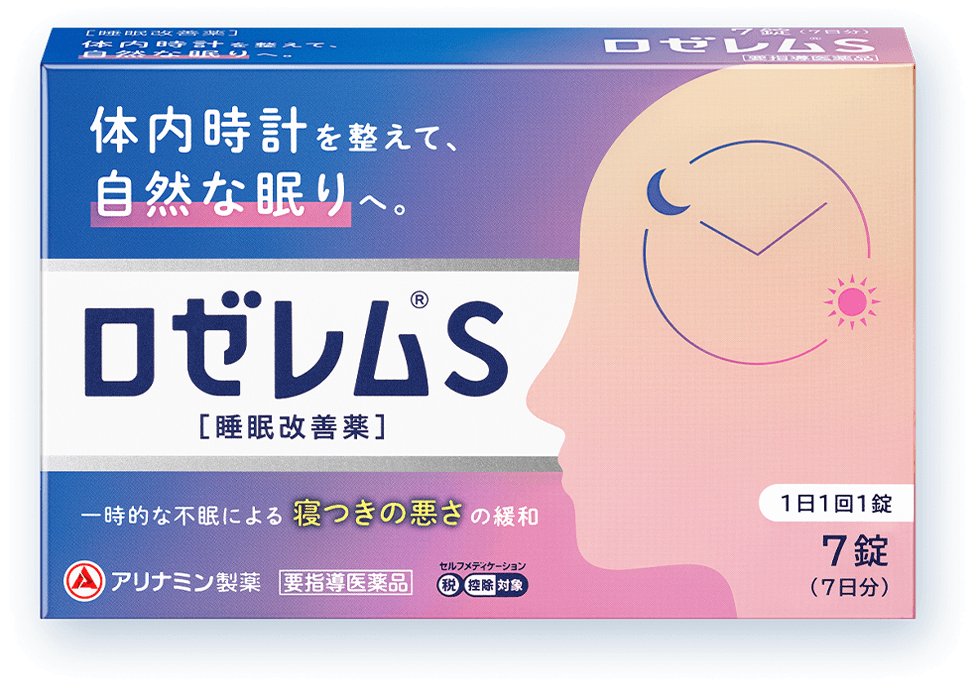
Rozerem S contains ramelteon (ラメルテオン) 8 mg. According to its Japanese package insert, it acts on melatonin receptors in the brain, adjusts the body clock that switches between sleep and wakefulness, and tips the balance toward sleep. It contains no antihistamine.
Ramelteon is not melatonin itself. It is a different compound that works on the same receptors. So if melatonin works for you at home, Rozerem S is the nearest thing in a Japanese pharmacy, but don't expect it to feel identical.
How to buy it: from a pharmacist
Rozerem S is a Pharmacist-Guidance Drug (要指導医薬品), a stricter category than Class 1. Go to a pharmacy or drugstore while a pharmacist is on duty. The pharmacist goes through a checklist with you to see whether you can take it, then explains it before selling. No prescription is needed.
How to take it
- Ages 15 and older: 1 tablet once a day, within 30 minutes before bed, with water or lukewarm water. Don't chew.
- Don't take it with a meal or right after one. The package insert says it may not work well enough.
- Only on nights when you have trouble falling asleep, and no longer than 2 weeks.
- If it hasn't helped after 2–3 doses, stop and talk to a doctor or pharmacist.
Who should not take it (main points)
- Anyone under 15, or anyone pregnant or possibly pregnant.
- Anyone who has had an allergic reaction to Rozerem S or its ingredients.
- People being treated for a sleep disorder (such as sleep apnea), a mental illness that comes with sleeplessness, or liver disease.
- People taking fluvoxamine (an antidepressant sold as Depromel or Luvox in Japan).
OTC Guide Japan has translated the full Rozerem S package insert into English, including drug interactions and side effects — read it here.
The Common Japanese Sleep Aid: Diphenhydramine (Drewell and Others)
Walk into the 睡眠改善薬 (sleep aid) section of any drugstore and many of the boxes are diphenhydramine sleep aids. Drewell (ドリエル) is one of them, and there are others with the same 50 mg dose, such as Neoday and Riposmin.
Diphenhydramine is an antihistamine — the ingredient in ZzzQuil and Benadryl. It works by causing drowsiness, which is a very different route from melatonin. These products are for trouble falling asleep or light sleep caused by temporary sleeplessness.
- Usually 2 tablets once, before bed, ages 15 and older. Check the box: some brands are 1 capsule.
- Not for long-term insomnia. The package insert says not to take it if you have chronic sleeplessness or have been diagnosed with insomnia.
- Drowsiness can carry into the next morning, so don't drive after taking it.
One box per person
Diphenhydramine is on Japan's list of abuse-prevention ingredients, so these sleep aids are limited to one unit per person, and staff may ask you a few questions at the register. Buyers under 18 face extra limits. Here's how the rules work.
For the full dosage and warnings in English, see our translated Drewell page.
A Herbal Option: Kampo Yokukansan
Kampo is Japan's traditional herbal medicine, and yokukansan (抑肝散) is the formula used for sleeplessness that comes with nervous tension, irritability, or a short temper. Kampo Naitomin Yokukansan Tablets is one OTC version.
It isn't a bedtime pill. Adults take 4 tablets twice a day, before meals or between meals. If you see no improvement after about a month, stop and talk to a doctor, pharmacist, or registered salesperson.
Melatonin vs Rozerem S vs Drewell: Which Japanese Sleep Aid?
| Rozerem S | Drewell and other diphenhydramine aids | Kampo yokukansan | |
|---|---|---|---|
| How it works | Acts on melatonin receptors | Antihistamine that causes drowsiness | Herbal formula |
| Best for | Trouble falling asleep | Trouble falling asleep or light sleep | Sleeplessness with nervous tension or irritability |
| When to take | 1 tablet within 30 min before bed | Before bed | Twice a day, before or between meals |
| Who sells it | Pharmacist only | Drugstores (one per person) | Drugstores |
| Age | 15+ | 15+ | 15+ |
| Longest use | 2 weeks | Occasional nights only | Consult if no better after about 1 month |
Based on each product's Japanese package insert. Melatonin itself isn't in the table because it isn't sold in Japan.
Before You Take a Sleep Aid in Japan
These rules come from the package inserts of Rozerem S and the diphenhydramine sleep aids:
- No alcohol before or after taking it.
- Don't drive or operate machinery afterward. Drowsiness can last into the next day.
- Don't combine it with cold medicine, allergy tablets, motion sickness pills, or another sleep aid. Many Japanese cold and allergy medicines contain antihistamines too.
- Breastfeeding? Don't take them while breastfeeding, or stop breastfeeding if you do.
- If you can't sleep night after night, these OTC medicines aren't meant for that. See a doctor; a clinic can look at the cause and prescribe if needed.
FAQ
Is Rozerem S the same as melatonin?
No. Its ingredient is ramelteon, which acts on melatonin receptors. It's the closest option in Japan, but it's a different medicine.
Do I need a prescription for Rozerem S?
No, but you can only buy it from a pharmacist, who will check with you before selling it. If the pharmacist isn't in, the store can't sell it.
What's the Japanese word for sleep aid?
Look for 睡眠改善薬 (suimin kaizen-yaku) on the shelf sign or the box.
See every sleep aid we've translated
OTC Guide Japan translates Japanese package inserts into English, so you know exactly what you're taking before you buy.
Browse sleep aids →